MVP vs prototype vs proof of concept: what each one tests and when to use it
Three tools, three different questions. Trouble starts when you ask the wrong one.
What is the difference between an MVP, a prototype and a proof of concept?
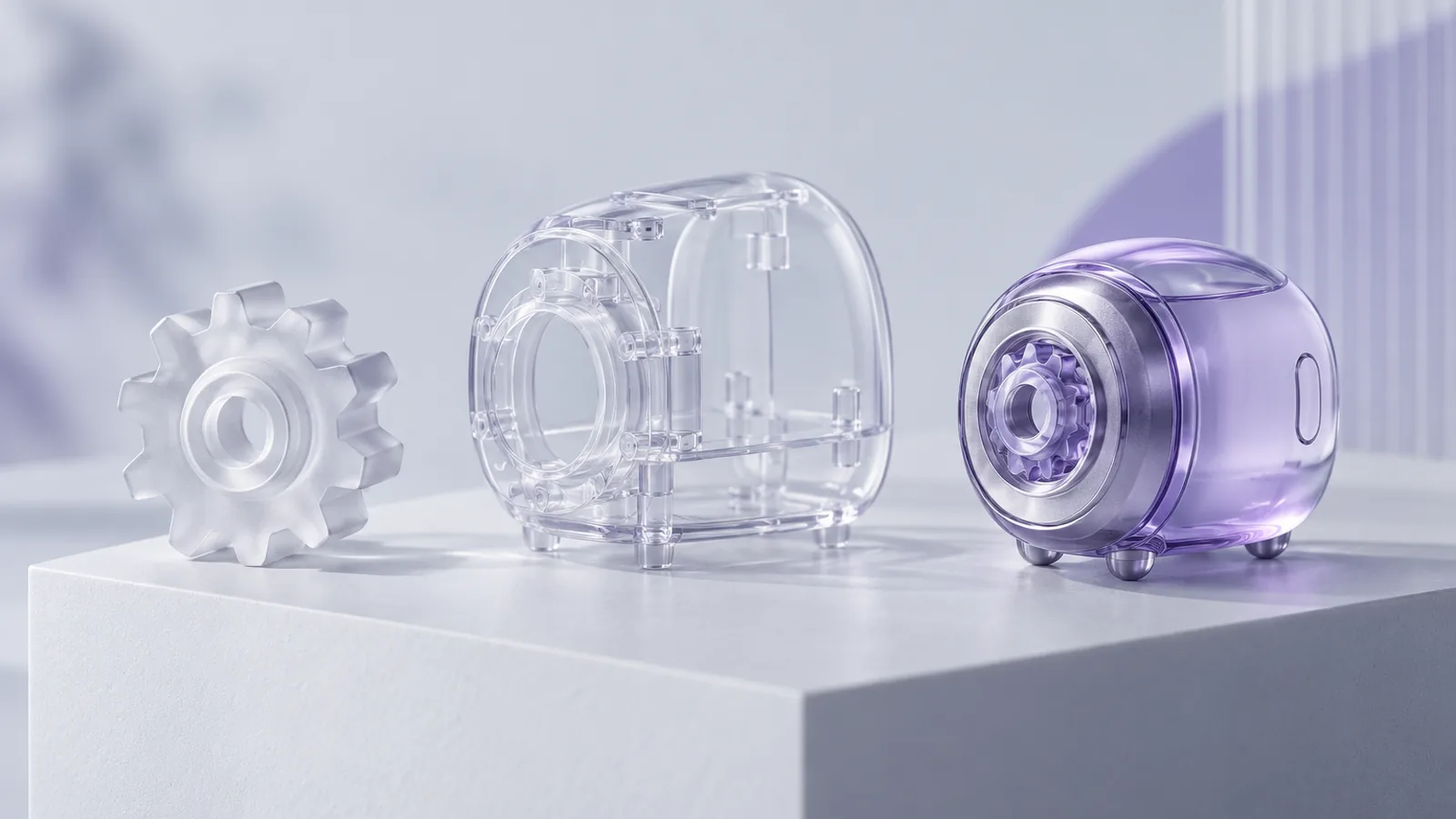
Each one retires a different kind of risk: technical, usability or market. The quickest way to see it is side by side.
| Proof of concept | Prototype | MVP | |
|---|---|---|---|
| Question | Can it be done? | Do people get it and can they use it? | Does anyone actually want it? |
| Risk retired | Technical | Comprehension and usability | Market |
| Audience | Your team, technical partners, sometimes investors | Test participants in moderated sessions | Real customers, in their normal week |
| Contents | The single most uncertain technical piece | Screens and flows, often with dummy data | The core workflow, working end to end |
| Code | Throwaway | Often none | Simple but fit for real users |
| Success looks like | It works under test conditions | Users finish tasks without help | Users return, pay or commit |
| Blind spot | Whether anyone will buy it | Whether anyone will use it weekly | Whether the architecture will scale |
When do you need a proof of concept?
When the biggest unknown is technical: you genuinely do not know whether the solution exists. Think of a vision model that has to spot hairline cracks on a production line, a connection to a bank's legacy system, or a language model that must answer accurately from a client's own documents.
European research funding makes this explicit. On the Commission's technology readiness scale, TRL 3 is the experimental proof of concept, while a system prototype demonstrated in an operational environment only arrives at TRL 7 (Horizon 2020, Annex G). The EIC Accelerator grant, for instance, targets innovation activities at TRL 6 to 8, so a deep-tech founder applying there needs to be past the proof-of-concept stage.
Most software startups can keep the proof of concept short or skip it. A booking tool for physiotherapy clinics carries little technical uncertainty; its risk is whether clinics will switch.
What can a prototype tell you, and what can it not?
A prototype shows you how people understand and move through your product before you build it. It can be paper sketches, a clickable Figma file or a coded mock-up with fake data.
Low fidelity or high fidelity?
Low-fidelity prototypes such as wireframes are for arguing about structure; high-fidelity ones, which look finished, are for watching realistic behaviour. Jakob Nielsen's long-standing advice is that a first round with five users uncovers around 85% of usability problems, so small, frequent rounds beat one big study.
1 day
That speed is the point, and also the limit. A prototype proves people can use something, not that they will use it every week. Polite participants nearly always say they like what they see, and a compliment in a usability lab is not a purchase order.
What does an MVP add that a prototype cannot?
Reality. People solving their own problem, without a facilitator beside them, with consequences if it breaks. Only then can you answer whether they want it enough to come back, pay or change a habit. The full definition and a step-by-step method are in what is an MVP.
In what order should you use them?
In order of risk, most dangerous first. There is no mandatory sequence: if there is no technical doubt, skip the proof of concept; if the interface is trivial, the prototype might take an afternoon.
Choosing where to start
List the risks
One per line, phrased as what could sink the project: the technology does not work, users cannot follow the flow, nobody pays.
Rank by damage and uncertainty
The top spot goes to the risk that would make everything else pointless if confirmed, and that you currently know least about.
Match the tool
Technical risk: proof of concept. Usability risk: prototype. Market risk: MVP, or before that a no-code test such as those in types of MVP.
Set an exit criterion
Agree before you start which result lets you move up a rung. Without one, proofs of concept turn into research projects and prototypes get polished forever.
Where do pilots and betas fit?
After the MVP, not instead of it. A pilot puts an MVP or a more mature product in front of one specific customer, usually a business, under real conditions with agreed goals and an end date; it is common in B2B, where a buyer wants evidence before signing.
A beta is a near-complete version opened to a wider audience to catch defects before general release. If you are still asking whether the problem exists at all, you do not need a beta yet.
What are the most common mistakes?
- Calling a prototype an MVP. A mock-up nobody uses in real life validates the interface at best, never the market.
- Shipping proof-of-concept code. It was written to demonstrate, not to last. Keep the learning, not necessarily the code.
- Skipping the prototype on delicate flows. If onboarding involves health data, payments or complex set-up, an hour of prototype testing can save weeks of building in the wrong direction.
- Polishing the demo for investors. A beautiful demo with no users is less convincing than a plain MVP with ten customers who keep coming back.
The three tools differ widely in cost and time. For what drives the price of an MVP see MVP development cost; for what stretches or shortens the schedule see how long it takes to build an MVP.
Frequently asked questions
What is the difference between an MVP and a prototype?
A prototype checks whether people can use your solution; an MVP checks whether they want it enough to use it for real. The first is tested in guided sessions, the second in customers' everyday work.
Can I raise money with a prototype?
At pre-seed, a prototype can help investors grasp the vision. It shows you understand the problem, not that a market exists, so usage data or customer commitments, even a handful, carry more weight.
Do I always need a proof of concept?
No. You need one when you genuinely do not know whether the solution is technically possible, as with AI on specialised data, hardware or closed third-party systems. For most software products the main risk is the market.
Can a prototype become the MVP?
Sometimes, if it was built in proper code on foundations meant for live use. If it is a design file or a throwaway experiment, start the MVP from what you learned rather than from the artefact.
Is a pilot the same as an MVP?
Not quite. A pilot is a structured trial with one customer, with agreed goals and duration, and it usually comes after an MVP has shown the problem is real. An MVP can be tested with many small users at once.
Sources
- European Commission, Horizon 2020 Work Programme 2014-2015, General Annex G: Technology readiness levels (19 October 2026)
- European Innovation Council, EIC Accelerator (19 October 2026)
- GV (Google Ventures), The Design Sprint (19 October 2026)
- Jakob Nielsen, Why You Only Need to Test with 5 Users (Nielsen Norman Group, 2000) (19 October 2026)
- Eric Ries, Minimum Viable Product: a guide (Startup Lessons Learned, 2009) (19 October 2026)
Figures and definitions checked on the dates shown.